


Want to know more?
Tell us your situation and a consultant will contact you in no time.
Contact us at

Many organizations include in their bylaws the possibility of delegating voting rights to another member or a third party. This delegation may be without voting instructions, when the person delegating trusts the judgment of their delegate when voting, or with voting instructions, when the person delegating wants to mark the vote for some or all of the questions on the ballot.
Kuorum enables simple and efficient management of proxy voting processes.
1. Enabling proxy voting
Administrators set up voting in Kuorum by activating the proxy option, always in compliance with the organization's internal statutes or regulations.
2. Choosing a proxy
Each voter selects the person to whom they wish to delegate their vote. This can be another member of the organization or an authorized third party.
3. Voting instructions (optional)
- With instructions: the voter indicates how they want to vote on some or all of the questions in the vote.
- Without instructions: the voter gives the proxy complete freedom to decide how to vote.
4. Registration of proxies
- Manual: administrators enter proxies received by paper, telephone, or email.
- Digital: voters manage the proxy directly from the platform within the enabled period.
5. Voting by the representative
On the day of the meeting, the delegate can cast their vote and those of all the delegators from a single screen, without the need to repeat identification processes.
Kuorum's functionality is useful in multiple contexts where participants cannot attend or prefer to entrust their vote to someone else. Some of the most common cases include:
- Neighborhood communities
- Associations
- Boards of directors
- Union elections
- Professional associations
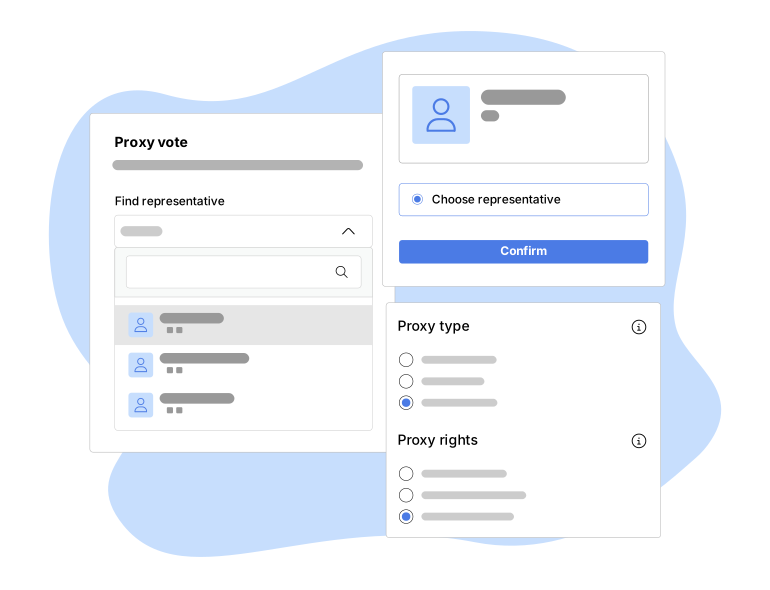
Many organizations include in their bylaws the option to delegate a vote to another member or a third party. This delegation may be without specific voting instructions, in which case the delegating member trusts their delegate’s judgment when casting the vote, or with specific voting instructions, in which case the delegating member wishes to specify how to vote on some or all of the items on the ballot.
Kuorum enables simple and efficient management of vote delegation processes.
1. Enabling vote delegation
Administrators set up voting in Kuorum by enabling the delegation option, always in compliance with the organization’s bylaws or internal regulations.
2. Selecting a proxy
Each voter selects the person to whom they wish to delegate their vote. This can be another member of the organization or an authorized third party.
3. Voting instructions (optional)
- With instructions: the voter specifies how they want the vote cast on some or all of the questions in the vote.
- Without instructions: the voter gives the delegate complete freedom to decide how to vote.
4. Delegation registration
- Manual: administrators enter delegations received via paper, phone, or email.
- Digital: Voters manage their proxy directly through the platform within the designated period.
5. Representative Voting
On the day of the assembly, the delegate can cast their own vote and those of all delegators from a single screen, without having to repeat identification processes.
Kuorum's functionality is useful in multiple contexts where participants cannot attend or prefer to entrust their vote to someone else. Some of the most common cases include:
- Neighborhood communities
- Associations
- Boards of directors
- Union elections
- Professional associations

Integrate with leading video conferencing tools to offer your remote constituents a seamless experience. Compatible with all platforms, such as Zoom, Teams, Webex and many more.


At Kuorum we help people around the world make collective decisions that matter. Tell us your goals and we'll tell you how we can help.


Proxy voting is a feature that allows a voter to transfer their right to vote in an assembly or collective decision-making process to another person or representative. This means that if someone is unable to participate directly in the vote, they can delegate that right to another member to vote on their behalf.
Proxy voting can also be used as an expression of trust in a representative. In these cases, the person delegating their vote may or may not attend the event, but their right is exercised by a third party to whom they have ceded the responsibility for making the decision.
At Kuorum, proxy voting can be managed in two ways:
The platform allows this process to be managed easily, whether administrators enter proxies manually or enable a period during which voters themselves delegate their votes digitally.
Generally, any eligible voter may delegate their vote provided that the organization's bylaws or internal rules allow it. The vote may be delegated to another member or to a designated third party, depending on the specific rules of each entity.
Using Kuorum for vote delegation offers several advantages:
To enable proxy voting, the following is required:
Legal validity depends on the delegation procedure complying with the organization's internal rules and applicable legislation. Kuorum facilitates the clear and audited recording and monitoring of these delegations, which helps to comply with legal and statutory requirements.
No, in elections for company staff representatives, voting must be personal, free, direct, and secret. This feature does not apply to this type of election.

Tell us your situation without obligation and a consultant will contact you.

Schedule a 30-minute product demo with our experts
